
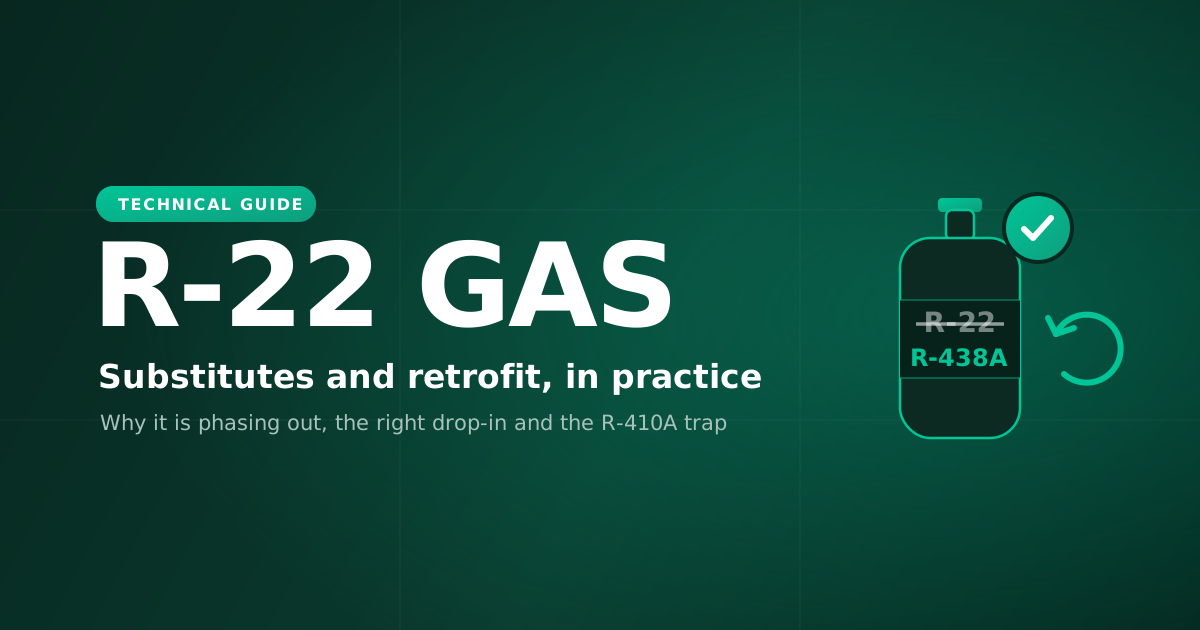
R-22 refrigerant: substitutes, retrofit and what changed (complete technical guide)
R-22 (also called HCFC-22 or freon R-22) was the most widely used refrigerant in the world for air-conditioning and commercial refrigeration for decades. Today it is on a countdown. Production and imports fall year after year, the price of the cylinder keeps rising and, at some point, there will simply be no new gas left to top up a charge. If you still have equipment running on R-22, the question is no longer "will I have to migrate?", it is "to what, when and how do I do it without burning the equipment?".
This guide answers everything from start to finish: why R-22 was banned, how long you can still use it, which drop-in substitutes actually work, why R-410A is a dangerous trap, and the technical step by step of a retrofit done the right way. Content written for the refrigeration technician and the business owner who needs to decide safely, not by guesswork.
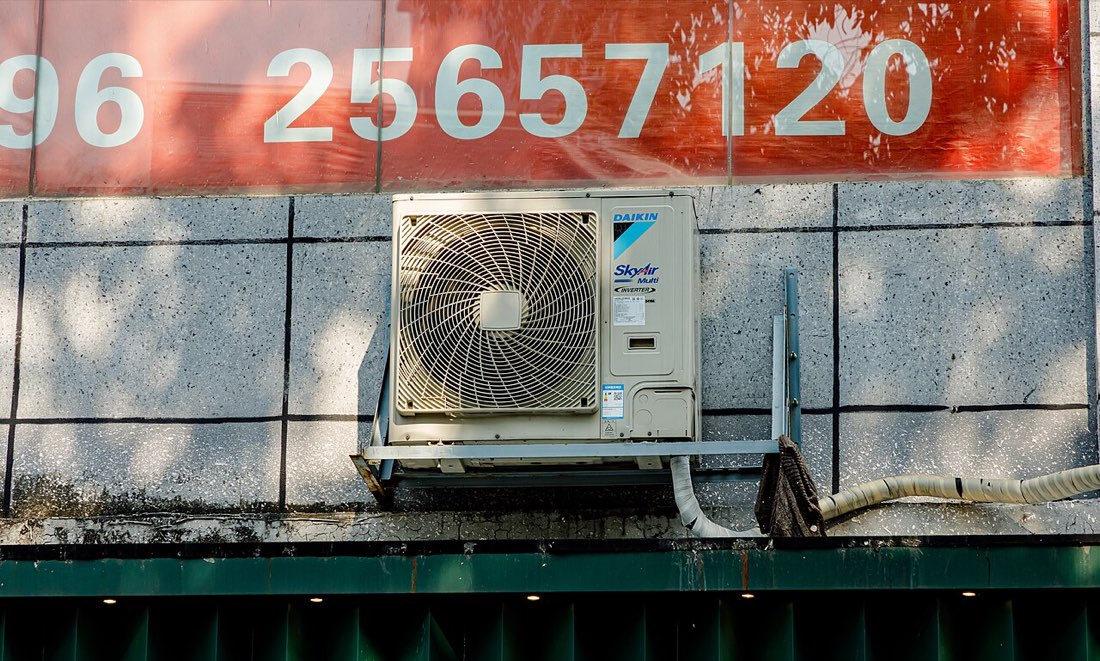
Why R-22 was banned
R-22 is an HCFC (hydrochlorofluorocarbon). The problem is the chlorine in the molecule: when the gas leaks and rises to the stratosphere, the chlorine destroys ozone molecules. The ozone layer is the natural filter that holds back the Sun's ultraviolet radiation. Less ozone means more UV reaching the surface, with a direct impact on health (skin cancer, cataracts) and on ecosystems.
For this reason, R-22 was placed on the list of substances controlled by the Montreal Protocol, the 1987 international treaty that organizes the gradual elimination (the so-called phase-out) of the substances that destroy the ozone layer. Nearly every country in the world is a signatory and follows a phase-out schedule.
The Montreal Protocol on Substances that Deplete the Ozone Layer is the treaty that sets the calendar for eliminating CFCs and HCFCs. It is one of the most widely ratified international agreements in history, and R-22 is one of the HCFCs scheduled for elimination.
The phase-out timeline
Under the Montreal Protocol, HCFC consumption is cut in steps against a baseline (a reference level of past consumption), and the reductions are calculated on that value. The milestones for developing countries follow this curve:
| Year | HCFC consumption reduction target | What it means in practice |
|---|---|---|
| 2013 | Freeze at the baseline | Consumption can no longer grow |
| 2015 | Reduction of 10% | The effective cut begins |
| 2020 | Reduction of 35% | R-22 supply already much smaller |
| 2025 | Reduction of 67.5% | Cylinder scarce and more expensive |
| 2030 | Reduction of 97.5% | Almost no new gas |
| 2040 | Total elimination (100%) | End of the line for R-22 |
Under the developing-country schedule, the reduction reaches 97.5% by 2030 and total elimination by 2040. Between 2030 and 2040 only a residual quota is allowed, intended for servicing existing equipment. In many developed countries the phase-out ran even faster, with new-gas production already ended.
Notice the curve: the jump from 67.5% (2025) to 97.5% (2030) is brutal. In practice, the window in which you can still find R-22 easily and at a reasonable price is closing now, in this decade.
What this means for you in practice
Three questions always come up. Let us get straight to them:
Can I keep using my R-22 machine?
Yes. There is no obligation to throw away equipment that works. What was cut is the production and import of new gas, not the use of what is already installed. Your cold room or your R-22 split can run normally as long as the charge is complete and the equipment is healthy.
How long will I find gas to top up a charge?
This is the uncomfortable part. Since supply drops every year (and plunges toward 2030), every leak that requires a recharge becomes more expensive and harder to solve. You can still find R-22 today, including recovered and recycled gas, but the trend only gets worse. Depending on new gas for recurring leaks has become a plan with a built-in expiration date.
Will it get more expensive?
It already has, and it keeps going. Falling supply against existing demand is the classic recipe for rising prices. The math changes: on every visit to top up R-22, part of the money is being buried in a gas that will disappear. That same amount could be paying down a permanent retrofit.
Honest summary: using what you have is not banned, but relying on R-22 for new charges is betting against the calendar. For machines with chronic leaks or that will operate for many more years, the retrofit (or the replacement) stopped being an "if" and became a "when".
R-22 drop-in substitutes: the table that matters
Here the term needs to be clear. A drop-in substitute (or retrofit gas) is a fluid designed to take the place of R-22 in the same equipment, with working pressures close to it, requiring few changes (or none) to the circuit. The goal is to keep the compressor, the condenser, the evaporator and the piping you already have, changing only the gas (and, in some cases, the oil).
The three most used R-22 substitutes are HFC blends. Compare them:
| Substitute | Typical application | Pros | Cons |
|---|---|---|---|
| R-438A (MO99) | Air-conditioning and commercial refrigeration in general. The most versatile drop-in. | Pressures very close to those of R-22. Tolerates mineral oil, alkylbenzene and POE (contains additives that help oil return). Oil change often unnecessary. | Has glide (temperature slide), requires charging in the liquid phase only. Capacity slightly lower than R-22. |
| R-422D | Medium and low temperature refrigeration (cold rooms, display cases). | Compressor discharge temperature lower than that of R-22, which tends to extend compressor life. Usually runs without an oil change. | COP (efficiency) lower than that of R-22, it loses performance. Glide. Compatibility with mineral oil is partial, better to ensure oil return. |
| R-407C | Air-conditioning (split, central) and heat pumps. | Capacity and efficiency close to those of R-22 in comfort cooling. Widely available. | Requires a change to POE oil (does not run on mineral oil). High glide, sensitive to leaks (it leaks out of balance, you need to recharge the whole system). |
A technical note that often confuses people: these three blends have glide, meaning they evaporate and condense across a temperature range, not at a single point. This changes how you read superheat and subcooling (use the dew temperature for SH and the bubble temperature for SC) and it forces you to charge the cylinder in the liquid phase, never in the vapor phase, otherwise the composition of the mixture changes.
The saturation pressure values line up with our internal technical catalog: at 40 °C condensing, R-438A works around 15.4 bar (liquid side) and R-407C around 16.5 bar, both in the same neighborhood as the roughly 14.3 bar of R-22. It is precisely this closeness that makes them safe drop-ins. Keep that number in mind, because the next gas on the list lives in another universe.
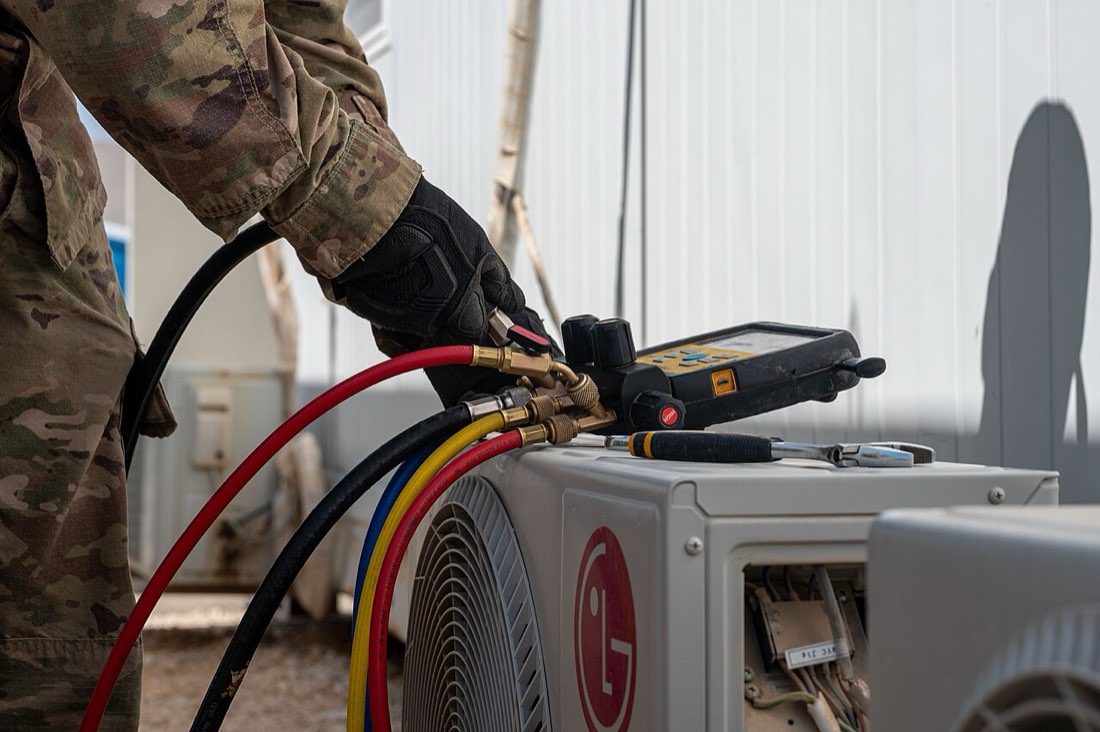
Safety warning: R-410A does NOT replace R-22
WARNING. This is the most dangerous mix-up in the industry.
Putting R-410A in place of R-22 in equipment designed for R-22 is a serious mistake. The working pressure of R-410A is much higher. The equipment was not sized for it and can fail violently: burned compressor, leaks, component rupture. R-410A is not a drop-in. It is not a retrofit. It is a different system.
Why is this so critical? Because the names look like "neighbors" and many people swap one for the other without checking the pressure. Look at the real difference, using the saturation values from our own gas catalog:
| Condensing temperature | R-22 (pressure) | R-410A (pressure) | Difference |
|---|---|---|---|
| 30 °C | 10.9 bar (158 psi) | 17.9 bar (260 psi) | +64% |
| 40 °C | 14.3 bar (208 psi) | 23.3 bar (337 psi) | +63% |
| 50 °C | 18.4 bar (267 psi) | 29.7 bar (431 psi) | +61% |
| 60 °C | 23.3 bar (337 psi) | 37.3 bar (541 psi) | +60% |
R-410A works with about 60% to 64% more pressure than R-22 under the same conditions. The compressor, heat exchangers, valves and piping of an R-22 machine were not built to withstand that continuously. The likely result is mechanical failure, and in the worst case the rupture of a component under pressure. The diagram below makes the difference visual.
Straight conclusion: migrating to R-410A means replacing the whole unit with one designed for R-410A. That is a machine replacement, not a retrofit. If the goal is to reuse what already exists, the way to go is the drop-ins from the previous table (R-438A, R-422D, R-407C), never R-410A.
Step by step of a retrofit done the right way
A retrofit is not just "remove one gas and put in another". Done wrong, you burn the very compressor you were trying to save. Done right, the equipment gains years of life with the new gas. This is the correct flow, in order:
1. Assess the equipment before anything else
It is not worth retrofitting a machine at the end of its life. Check the state of the compressor, chronic leaks, age and efficiency. If the equipment is already in bad shape, the new gas will not fix the mechanics. Decide which blend is right for the application (comfort cooling, medium or low temperature) by consulting the fluid manufacturer's data.
2. Recover the old R-22 correctly
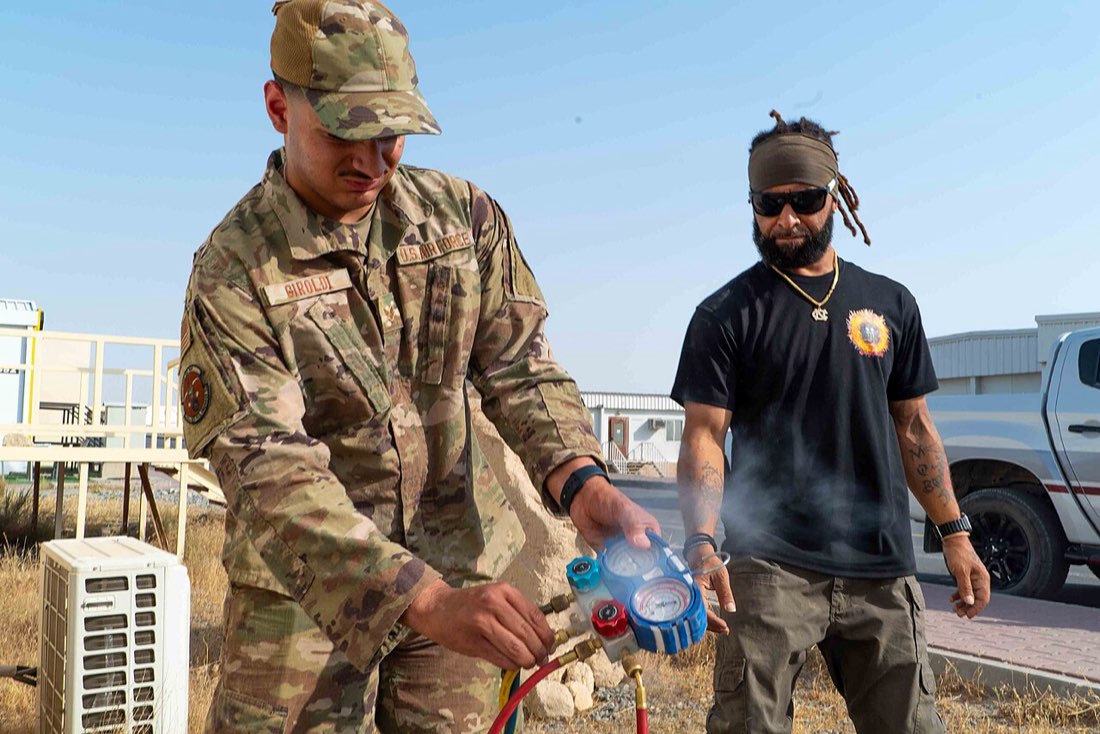
Releasing gas into the atmosphere is an environmental offense and a waste. Use a recovery machine and a recovery cylinder to remove all the R-22 from the system. This recovered gas can be recycled or disposed of properly. Never vent it to the air.
3. Change the oil, if the combination requires it
Here is the point that burns the most compressors. The oil needs to return to the compressor along with the refrigerant. The general rule:
- R-407C: requires a change to POE oil (polyolester). It does not circulate well in mineral oil. You may need more than one oil flush until the residual mineral oil is low.
- R-438A and R-422D: were formulated with additives that improve mineral oil return, so they often do not require an oil change. Even so, on long or complex systems, adding a portion of POE ensures the return. Always follow the gas manufacturer's data sheet.
Mineral oil trapped in the evaporator, not returning, is a slow death for the compressor. When in doubt, ensure oil return.
4. Pull a vacuum on the system
After recovering the gas and adjusting the oil, pull a deep vacuum with a vacuum pump to remove air and moisture from the circuit. Moisture inside the system reacts with the oil and forms acids that corrode the compressor from the inside. A properly done vacuum (verified with a micron gauge, not the manifold gauge) is non-negotiable.
5. Charge the new gas in the liquid phase
R-22 substitutes are blends with glide. If you charge in the vapor phase, the composition of the mixture changes and performance goes down the drain. Always charge in the liquid phase (inverted cylinder or with a dip tube, being careful not to slug liquid into the compressor). Weigh the charge, do not rely on pressure alone.
6. Check superheat and subcooling
With the machine running, confirm that superheat (SH) and subcooling (SC) are within the correct range. On blends with glide, remember: SH is calculated against the dew temperature and SC against the bubble temperature. SH that is too low risks liquid returning to the compressor; SH that is too high means undercharge. Fine-tune until it stabilizes.
Frequently asked questions about R-22 and its substitutes
Is R-22 banned?
Using machines that are already installed is not banned. What is being phased out is the production and import of new gas, following the Montreal Protocol timeline. Under the developing-country schedule the reduction reaches 97.5% by 2030 and total elimination by 2040, with a residual quota for servicing only between 2030 and 2040. Many developed countries phased it out even earlier.
What is the best R-22 substitute?
There is no single best one, it depends on the application. For air-conditioning, R-438A and R-407C are the most common (R-438A usually requires less fuss with the oil). For medium and low temperature commercial refrigeration, R-438A and R-422D are widely used. R-438A (MO99) is the most versatile drop-in because it tolerates all three oil types and has pressures very close to those of R-22.
Can I put R-410A in place of R-22?
No. R-410A works with about 60% more pressure than R-22 and equipment designed for R-22 was not sized for that. Using R-410A in an R-22 machine can burn the compressor and rupture components. Migrating to R-410A means replacing the whole unit with one made for that gas, it is not a retrofit.
Is a retrofit worth it, or is it better to replace the machine?
If the equipment is in good mechanical shape and has years of life ahead, the retrofit usually comes out much cheaper than replacing everything. If the machine is already old, inefficient or has chronic leaks, the retrofit money is better spent on new (and more efficient) equipment. The technical assessment in step 1 is what decides.
Do I need to change the oil in a retrofit?
It depends on the gas. R-407C requires POE oil. R-438A and R-422D were formulated to live with mineral oil and often do not require a change, although adding POE helps oil return on long systems. Always consult the fluid manufacturer's data sheet.
Can the recovered R-22 gas be reused?
Yes. Recovered R-22 can be recycled and reused, which is one of the few sources that will remain as new gas disappears. That is why correct recovery (without venting to the atmosphere) also matters from an economic point of view, on top of the environmental one.
Is there a risk of a fine for releasing gas into the atmosphere?
Releasing refrigerant into the atmosphere constitutes environmental damage and is prohibited in most countries. The correct approach is to recover it with a recovery machine and dispose of it properly. Beyond avoiding legal trouble, you preserve a gas that is getting more and more expensive.
Conclusion: stop betting against the calendar
R-22 had its time. The timeline is clear: supply falls, the price rises and 2030 is right around the corner. For anyone who makes a living keeping equipment running, the right reading is to plan the migration before it turns into an emergency. Assess each machine, choose the correct drop-in (R-438A, R-422D or R-407C, never R-410A in an R-22 system) and do the retrofit with recovery, vacuum and SH and SC checks all done properly.
And to organize this transition at scale (knowing which clients still have R-22 machines, scheduling retrofit visits, recording which gas was used in each piece of equipment and tracking everything from the technician's phone in the field), a good management tool makes the difference. The Dominex system for refrigeration companies puts work orders, equipment, gas history and the crew in one place, with an app you can install on the technician's phone.
Organize your retrofits and your fleet of R-22 equipment
Work order, equipment and crew control on the technician's phone. Free 14-day trial, no credit card.
Start free trialReferences
- UN Environment Programme (UNEP). About Montreal Protocol. unep.org ↗
- UNEP OzonAction. HCFC phase-out management plans. unep.org ↗
- U.S. EPA. Phaseout of Class II Ozone-Depleting Substances (HCFCs). epa.gov ↗
- Danfoss. R-22 phase down (manufacturer technical reference). danfoss.com ↗
- Opteon (Chemours). R-22 retrofit guidance (manufacturer technical reference). opteon.com ↗
- Saturation pressure data (P vs T) of the refrigerants: internal Dominex technical catalog, validated against NIST tables and manufacturers.
Image credits
- Air-conditioning condenser unit: photo by Dinkun Chen, via Wikimedia Commons, licensed under CC BY-SA 4.0. See original ↗
- Technician with a manifold gauge set: photo by the U.S. Air Force (Senior Airman Grace Turpin), public domain, via Wikimedia Commons. See original ↗
- Technicians charging gas: photo by the U.S. Air Force (Senior Airman Mark Colmenares), public domain, via Wikimedia Commons. See original ↗
Comments (0)
Your comment goes through approval before it appears.
No comments yet. Be the first!
Ready to take your operation off paper?
Try Dominex free for 14 days and see work orders in your technician's pocket.
Start free for 14 days, no card